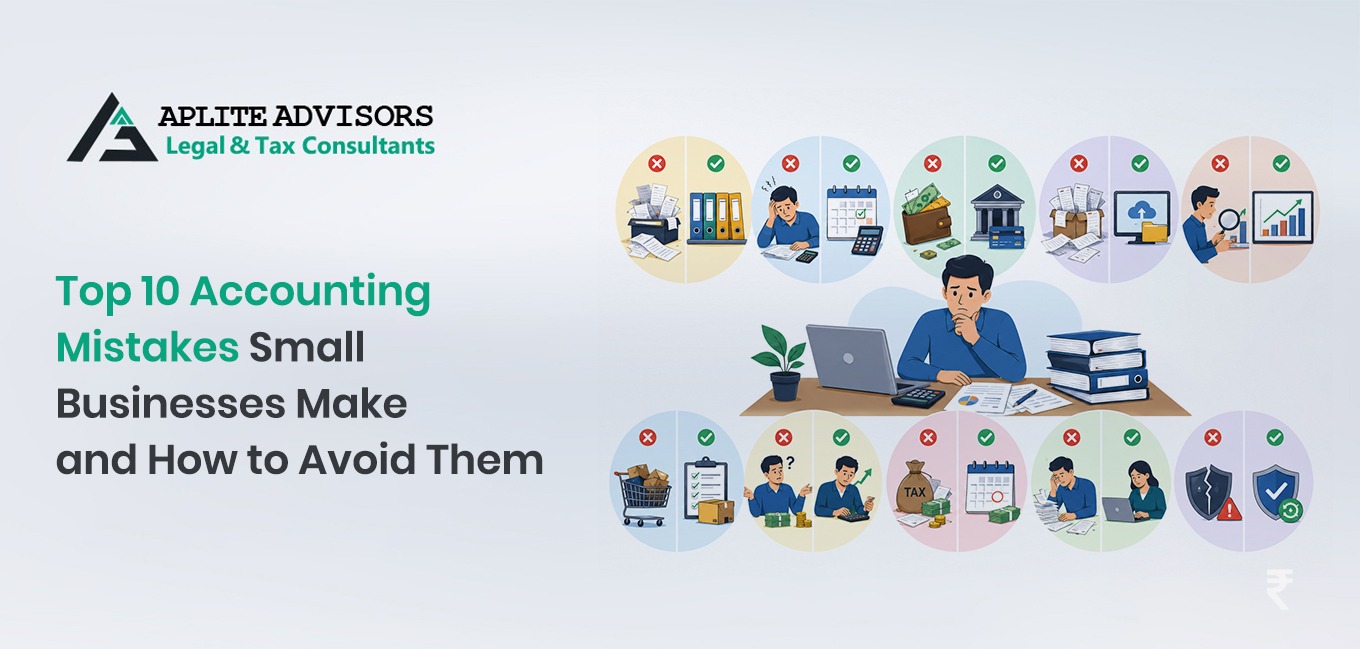
The Hidden Accounting Errors That Can Cost Your Business Time, Money, and Growth
For many small business owners, accounting often takes a back seat to sales, operations, and customer management. However, poor accounting practices can lead to cash flow problems, tax penalties, compliance issues, inaccurate financial reporting, and missed growth opportunities.
Many businesses don’t fail because of a lack of customers—they struggle because they lack financial visibility and control. Even small accounting mistakes, when repeated over time, can have a significant impact on profitability and business sustainability.
At Aplite Advisors, we regularly help startups, SMEs, and growing businesses identify accounting gaps and implement systems that improve financial accuracy and compliance. In this guide, we explore the top accounting mistakes small businesses make and provide practical solutions to avoid them.
Why Accurate Accounting Matters for Small Businesses
Accounting is much more than recording income and expenses. It provides critical insights into your company’s financial health, helping you make informed business decisions.
Proper accounting helps businesses:
- Track profitability accurately
- Manage cash flow effectively
- Meet tax and compliance obligations
- Secure loans and investor funding
- Plan future growth strategically
- Reduce financial risks
Without reliable accounting records, business owners often make decisions based on assumptions rather than actual financial data.
- Mixing Personal and Business Finances
One of the most common mistakes small business owners make is using the same bank account for both personal and business transactions.
When personal and business expenses are mixed, it becomes difficult to track actual business performance, prepare tax returns, and maintain accurate financial records.
How to Avoid It
Follow these best practices:
- Open a dedicated business bank account
- Use a separate business credit card
- Avoid paying personal expenses from business funds
- Maintain proper documentation for all transactions
Keeping finances separate simplifies bookkeeping and improves financial transparency.
- Not Maintaining Regular Bookkeeping
Many business owners postpone bookkeeping until tax season arrives. This often leads to missing transactions, inaccurate records, and unnecessary stress.
Delayed bookkeeping can make it difficult to monitor cash flow and identify financial issues before they become serious problems.
How to Avoid It
Create a routine bookkeeping process:
- Update records weekly or monthly
- Record all sales and expenses promptly
- Reconcile accounts regularly
- Use accounting software for automation
Consistent bookkeeping provides real-time visibility into business finances.
- Ignoring Cash Flow Management
A profitable business can still face financial difficulties if cash flow is poorly managed. Many small businesses focus only on revenue and profit while overlooking the timing of incoming and outgoing cash.
Warning Signs of Poor Cash Flow Management
- Delayed vendor payments
- Difficulty paying salaries
- Frequent borrowing for operations
- Low bank balances despite strong sales
How to Avoid It
Businesses should:
- Monitor cash flow reports regularly
- Forecast future cash requirements
- Follow up on customer payments promptly
- Maintain an emergency cash reserve
Strong cash flow management ensures business stability and operational continuity.
- Failing to Reconcile Bank Accounts
Bank reconciliation is the process of comparing accounting records with actual bank statements. Many businesses neglect this step, resulting in duplicate entries, missing transactions, and accounting errors.
Benefits of Regular Reconciliation
- Detects fraud or unauthorized transactions
- Identifies accounting mistakes early
- Improves financial accuracy
- Supports reliable financial reporting
Businesses should reconcile bank accounts at least once every month.
- Poor Expense Tracking and Documentation
Small businesses often lose valuable tax deductions because expenses are not properly recorded or documented. Missing invoices, receipts, or supporting documents can create problems during audits and tax assessments.
How to Avoid It
Maintain proper records for:
- Vendor invoices
- Utility bills
- Travel expenses
- Office expenses
- Employee reimbursements
Using digital document storage systems can simplify record management significantly.
- Missing Tax Deadlines and Compliance Requirements
Late filing of tax returns, GST returns, TDS returns, and other statutory filings can result in penalties, interest, and compliance notices.
Many small businesses struggle because they lack a structured compliance calendar.
Common Compliance Deadlines Businesses Must Track
- GST returns
- Income Tax Returns
- TDS returns
- ROC filings (for companies)
- Professional tax filings
How to Avoid It
Businesses should:
- Maintain a compliance calendar
- Set filing reminders
- Work with qualified tax professionals
- Review upcoming deadlines regularly
Timely compliance protects businesses from avoidable financial penalties.
- Not Monitoring Accounts Receivable
Outstanding customer payments can quickly create cash flow problems if left unmanaged. Many business owners focus heavily on sales generation but fail to monitor collections effectively.
How to Avoid It
Implement a receivables management process:
- Send invoices promptly
- Define clear payment terms
- Follow up on overdue payments
- Review aging reports regularly
Improving collections often has a greater impact on cash flow than increasing sales.
- Overlooking Financial Reports
Many small business owners rarely review their financial statements. Without analyzing financial reports, it becomes difficult to identify trends, inefficiencies, and growth opportunities.
Key Financial Reports Every Business Should Review
Profit & Loss Statement
Shows revenue, expenses, and profitability.
Balance Sheet
Provides a snapshot of assets, liabilities, and business net worth.
Cash Flow Statement
Tracks cash movement within the business.
Accounts Receivable Reports
Monitors customer payment status.
Regular review of these reports supports better business decisions.
- Relying Solely on Spreadsheets for Accounting
Spreadsheets may work during the early stages of a business, but they become difficult to manage as transaction volumes increase.
Manual spreadsheets increase the risk of:
- Data entry errors
- Formula mistakes
- Missing records
- Limited reporting capabilities
How to Avoid It
Invest in modern accounting software that offers:
- Automated bookkeeping
- Bank integrations
- GST compliance support
- Real-time reporting
- Secure cloud access
Technology improves both efficiency and accuracy.
- Trying to Manage Everything Without Professional Guidance
Many small business owners attempt to handle accounting, taxation, compliance, and financial planning themselves. While this may reduce short-term costs, it often leads to expensive mistakes and missed opportunities.
Signs You Need Professional Accounting Support
- Financial reports are unclear
- Tax filings feel overwhelming
- Cash flow issues occur frequently
- Compliance notices are increasing
- Business growth is accelerating
Professional advisors can help businesses avoid costly errors while improving financial performance.
Warning Signs That Your Business Accounting Needs Immediate Attention
Accounting issues often develop gradually before becoming major problems.
Watch for These Red Flags
- Frequent cash shortages
- Unreconciled bank accounts
- Delayed financial reports
- Missed tax deadlines
- Rising business debt
- Unexplained expense increases
- Difficulty determining profitability
Addressing these warning signs early can prevent larger financial challenges later.
Best Practices for Strong Financial Management
Businesses that maintain strong accounting systems are better positioned for long-term growth.
Recommended Accounting Best Practices
Maintain Accurate Records
Record all transactions promptly and accurately.
Review Financial Reports Monthly
Monitor performance and identify trends early.
Separate Business Finances
Keep personal and business transactions completely separate.
Automate Where Possible
Use accounting technology to improve efficiency.
Work With Financial Experts
Professional guidance reduces risk and improves compliance.
These practices create a strong financial foundation for sustainable growth.
How Aplite Advisors Helps Small Businesses Improve Financial Control
At Aplite Advisors, we help businesses build efficient accounting systems that support growth, compliance, and profitability.
Our services include:
- Accounting & Bookkeeping
- GST Compliance
- Income Tax Filing
- Financial Reporting
- Virtual CFO Services
- ROC Compliance
- Business Advisory
- Tax Planning & Optimization
Our goal is to help businesses gain complete financial visibility while reducing compliance risks.
Better Accounting Habits Lead to Stronger Business Growth
Successful businesses don’t just focus on generating revenue—they focus on managing finances effectively. Accurate accounting provides the clarity, control, and confidence needed to make informed business decisions and achieve long-term growth.
By avoiding common accounting mistakes such as poor bookkeeping, cash flow mismanagement, missed compliance deadlines, and inadequate financial reporting, small businesses can improve profitability, reduce risks, and build a stronger foundation for future success.
At Aplite Advisors, we help businesses transform accounting from a routine administrative task into a strategic tool for growth, stability, and financial success. Because every smart business decision starts with accurate financial information.