Audits play an important role in maintaining financial transparency, accountability and regulatory compliance. For businesses operating in India, understanding audit requirements is essential for avoiding compliance gaps, improving financial controls and building confidence among stakeholders.
However, not all audits serve the same purpose. Internal audit vs statutory audit is a common point of confusion among business owners, directors, entrepreneurs and finance managers. While both involve examining business records and processes, they differ in their objectives, legal requirements, scope, reporting responsibilities and outcomes.
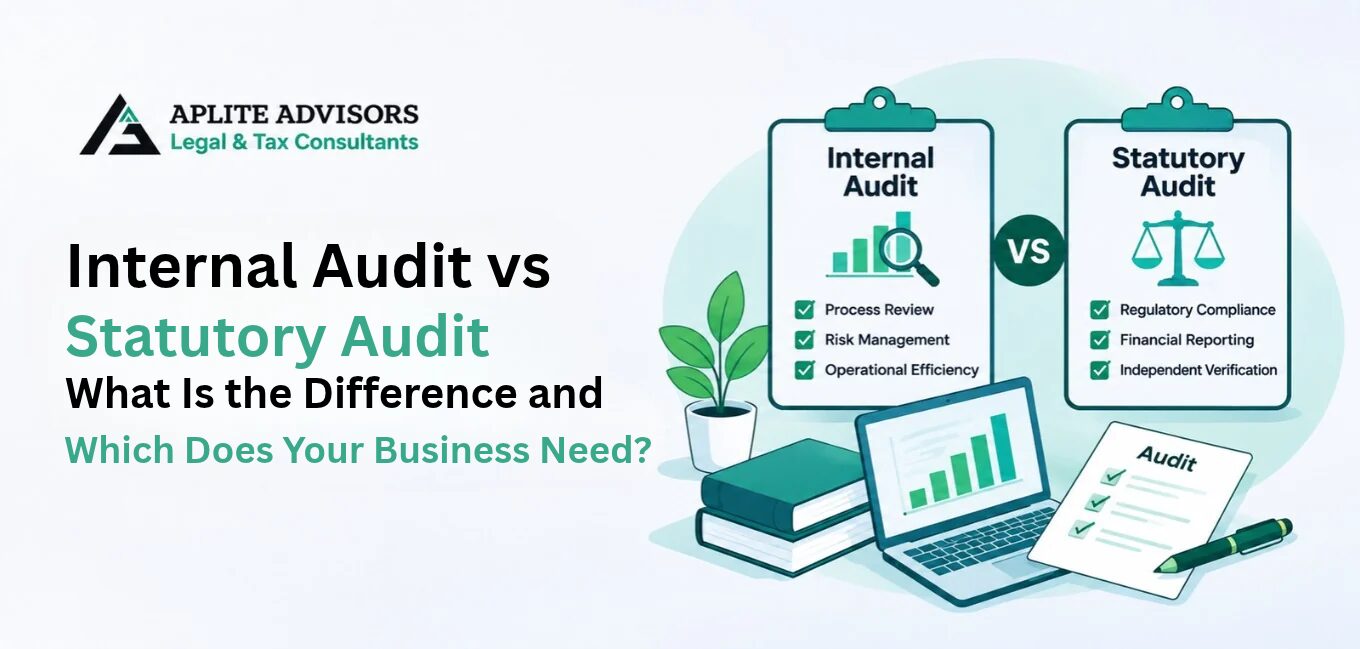
An internal audit primarily evaluates an organisation’s internal controls, risk management systems and operational efficiency. A statutory audit, on the other hand, is a legally required independent examination of a company’s financial statements.
Understanding the difference between internal and statutory audit can help businesses identify their legal obligations and decide whether additional internal auditing support would benefit their operations.
This guide explains both audit types, their applicability under Indian laws and how businesses can determine which audit approach they need.
What Is an Internal Audit?
An internal audit is an independent and systematic evaluation of an organisation’s internal controls, risk management practices, financial processes and operational activities.
Its primary purpose is to help management understand whether business systems are functioning effectively and whether appropriate procedures are being followed.
Unlike a statutory audit, which focuses on the independent examination of financial statements, internal auditing can cover several areas of an organisation, including finance, procurement, inventory, human resources, operations and regulatory compliance.
Key Areas Covered Under Internal Audit
An internal audit may examine:
- Internal financial controls: Whether appropriate checks and approval systems exist for financial transactions.
- Risk management: Whether financial, operational and compliance-related risks are identified and managed.
- Operational processes: Whether departments follow established procedures and operate efficiently.
- Fraud prevention: Whether controls are adequate to reduce the risk of fraud, misuse of funds and irregular transactions.
- Regulatory compliance: Whether applicable laws, policies and internal requirements are being followed.
- Financial reporting: Whether accounting records and management reports are accurate and reliable.
How Does Internal Audit Help Businesses?
An effective internal audit provides management with practical insights into potential weaknesses and areas requiring improvement.
For example, an audit may identify:
- Unauthorised expenses or weak approval procedures.
- Delays in vendor payments and customer collections.
- Inaccurate inventory records.
- Gaps in documentation and accounting practices.
- Inefficient procurement or operational procedures.
- Weak access controls over financial information.
Based on its findings, the internal auditor can recommend corrective measures to strengthen business processes.
For businesses looking to improve their internal control systems, Aplite Advisors’ Internal Audit Services cover internal control reviews, risk assessment, operational audits, SOP development and enterprise risk advisory.
What Is a Statutory Audit?
A statutory audit is an independent examination of an organisation’s financial statements conducted because it is required under applicable legislation.
In India, statutory audits of companies are primarily governed by the Companies Act, 2013. The audit is intended to provide shareholders and other stakeholders with an independent opinion on whether the financial statements present a true and fair view of the company’s financial position and performance, in accordance with applicable requirements.
The statutory auditor examines financial records, accounting policies, supporting documents, transactions and other relevant information to obtain sufficient audit evidence.
Statutory Audit Under the Companies Act, 2013
The key provisions include:
- Section 139: Deals with the appointment of company auditors.
- Section 141: Specifies the eligibility, qualifications and disqualifications of auditors.
- Section 143: Explains the powers and duties of auditors and applicable auditing standards.
- Section 144: Restricts statutory auditors from providing certain additional services, including internal audit, to the company.
Under Section 139, every company is required to appoint an auditor in accordance with the Act. The appointment is generally made by members at the first annual general meeting, subject to the statutory provisions governing the first auditor and other applicable requirements.
What Does a Statutory Auditor Examine?
A statutory audit generally involves:
- Examining the company’s books of accounts.
- Verifying financial transactions and supporting documentation.
- Reviewing accounting policies and financial statement disclosures.
- Evaluating compliance with applicable accounting standards.
- Examining relevant internal financial controls.
- Assessing whether financial statements present a true and fair view.
- Issuing an independent audit report.
The statutory auditor’s report provides an independent assessment of the company’s financial statements and highlights any qualifications, adverse observations or other matters that require attention.
Internal Audit vs Statutory Audit: Key Differences
Although both audits involve examining business records and financial information, their objectives and responsibilities are different.
The following table explains the major differences between internal audit vs statutory audit.
| Comparison Factor | Internal Audit | Statutory Audit |
| Main purpose | Improve internal controls, risk management and business processes. | Express an independent opinion on financial statements. |
| Requirement | Mandatory for specified classes of companies under Section 138 and Rule 13; voluntary for others. | Mandatory for companies under the Companies Act, 2013. |
| Appointment | Appointed in accordance with applicable requirements by the Board or Audit Committee. | Generally appointed by members/shareholders under Section 139, subject to statutory exceptions. |
| Scope | Internal controls, operational processes, risk management and compliance systems. | Financial statements, accounting records and related statutory audit requirements. |
| Reporting | Management, Audit Committee or Board of Directors. | Members/shareholders through the statutory auditor’s report. |
| Frequency | Based on business needs and applicable legal requirements. | Annual statutory audit. |
| Independence | Requires appropriate objectivity and independence from the activities being reviewed. | Must satisfy statutory independence and eligibility requirements. |
| Primary outcome | Findings, recommendations and corrective action plans. | Independent audit opinion on financial statements. |
| Focus | Improving business performance and control effectiveness. | Financial reporting reliability and statutory accountability. |
Key Takeaway
An internal audit helps management understand whether the organisation is operating effectively and managing risks appropriately. A statutory audit provides an independent opinion on the company’s financial statements.
Therefore, neither audit replaces the other. They serve different purposes and can complement each other.
Key Objectives of Internal and Statutory Audits
Understanding the objectives of both audits makes it easier to determine their value for a business.
Objectives of Internal Audit
The main objectives of an internal audit include:
Strengthening Internal Financial Controls
Internal auditors evaluate financial processes, transaction approvals, reconciliations and documentation to identify weaknesses in existing controls.
Identifying Operational Risks
An internal audit helps identify risks associated with procurement, inventory, employee responsibilities, vendor management and other business activities.
Improving Compliance Processes
It reviews whether employees and departments follow applicable regulations, internal policies and established procedures.
Detecting Control Gaps and Inefficiencies
Internal auditors identify unnecessary expenses, ineffective processes, reporting errors and potential areas of financial leakage.
Supporting Management Decisions
Audit findings provide management with information that can help improve operational efficiency, financial discipline and risk management.
Objectives of Statutory Audit
The primary objectives of a statutory audit include:
Examining Financial Statements
The auditor examines the balance sheet, statement of profit and loss, cash flow statement where applicable, and relevant disclosures.
Assessing the True and Fair View
The audit provides an independent opinion on whether the financial statements present a true and fair view in accordance with applicable accounting and legal requirements.
Reviewing Accounting and Legal Compliance
The auditor evaluates relevant accounting practices, records and statutory requirements within the scope of the audit.
Providing an Independent Audit Opinion
The statutory auditor communicates the audit conclusion to the members of the company through the audit report.
Is Internal Audit Mandatory for Every Business in India?
No. Internal audit is not mandatory for every business in India. Under Section 138 of the Companies Act, 2013, read with Rule 13 of the Companies (Accounts) Rules, 2014, specified classes of companies must appoint an internal auditor.
The applicability is based on the company’s listing status and certain financial thresholds.
Companies Required to Appoint an Internal Auditor
The following companies are covered under Rule 13:
- Every Listed Company
All listed companies are required to appoint an internal auditor.
- Unlisted Public Companies
An unlisted public company must appoint an internal auditor if it meets any of the following criteria during the preceding financial year:
- Paid-up share capital of ₹50 crore or more.
- Turnover of ₹200 crore or more.
- Outstanding loans or borrowings from banks or public financial institutions of ₹100 crore or more at any point during the preceding financial year.
- Outstanding deposits of ₹25 crore or more at any point during the preceding financial year.
- Private Limited Companies
A private company must appoint an internal auditor if it meets either of these criteria during the preceding financial year:
- Turnover of ₹200 crore or more.
- Outstanding loans or borrowings from banks or public financial institutions of ₹100 crore or more at any point during the preceding financial year.
Can Other Businesses Conduct Voluntary Internal Audits?
Yes. Even if a business does not fall under the mandatory applicability criteria, it can voluntarily conduct internal audits.
This can be particularly useful for:
- Growing startups with increasing transaction volumes.
- SMEs managing multiple departments or locations.
- Businesses with complex procurement and inventory processes.
- Organisations seeking better financial controls.
- Companies preparing for expansion or external investment.
Under Section 138, the internal auditor may be a Chartered Accountant, Cost Accountant or another professional decided by the Board. Rule 13 also provides for the appointment of an individual, partnership firm or body corporate, as applicable.
The Audit Committee or Board, in consultation with the internal auditor, determines the scope, functioning, periodicity and methodology of the audit.
Is Statutory Audit Mandatory for Every Company?
Yes. Under Section 139 of the Companies Act, 2013, every company registered under the Companies Act is required to have a statutory auditor, irrespective of its turnover, revenue or profitability.
This requirement applies to private limited companies, public limited companies and One Person Companies, subject to the applicable statutory provisions.
Appointment of Statutory Auditors
The appointment process generally involves the following:
- The first auditor of a company other than a Government company is ordinarily appointed by the Board of Directors within 30 days of registration.
- If the Board fails to appoint the first auditor, the members appoint the auditor through an extraordinary general meeting within the prescribed period.
- Members generally appoint the subsequent statutory auditor at the first annual general meeting.
- The auditor holds office until the conclusion of the sixth annual general meeting, subject to the Act and applicable provisions.
- Auditor eligibility, consent, independence and filing requirements must be followed.
Certain classes of companies are also subject to auditor rotation requirements under Section 139.
Do LLPs, Partnership Firms and Proprietorships Need Statutory Audits?
Audit applicability depends on the legal structure of the business.
| Business Structure | General Audit Requirement |
| Private Limited Company | Statutory audit is mandatory under the Companies Act, irrespective of turnover. |
| Public Limited Company | Statutory audit is mandatory under the Companies Act. |
| One Person Company | Statutory audit is mandatory under the Companies Act. |
| Limited Liability Partnership (LLP) | Audit is generally required if annual turnover exceeds ₹40 lakh or contribution exceeds ₹25 lakh, subject to applicable rules. |
| Partnership Firm | No general statutory audit requirement under the Companies Act; tax audit may apply under income-tax law. |
| Sole Proprietorship | No statutory audit under the Companies Act; tax audit may apply under income-tax law. |
Important: The LLP audit exemption and the applicability of tax audit are separate matters. A business may not require an audit under one law but may still have an audit obligation under another.
Which Audit Does Your Business Need?
The appropriate audit approach depends on the organisation’s legal structure, size, financial complexity and operational risks.
Startups and Small Businesses
Startups should first identify their statutory audit obligations based on their registered business structure.
A private limited startup requires a statutory audit regardless of its turnover. An LLP, partnership firm or proprietorship may have different audit requirements.
Even when internal audit is not legally mandatory, startups can consider periodic internal reviews to improve financial controls, expense monitoring and transaction documentation.
Growing Companies
Businesses experiencing rapid growth may face increasing financial and operational complexity.
Internal audits can help review procurement, payroll, inventory, accounting procedures and financial approvals while statutory audits address annual financial reporting obligations.
Large Businesses
Large organisations may need both audits, either because internal audit is legally mandatory or because management considers it important for governance and risk management.
A structured internal audit programme can help management monitor multiple departments, locations and business processes.
Companies With Complex Operations
Businesses operating across multiple locations, managing large inventories or handling significant vendor transactions may benefit from regular internal audits.
These reviews can help identify control gaps and improve accountability across different departments.
The right approach: Businesses should not choose between internal and statutory audits as though they are alternatives. They should first meet all applicable legal requirements and then assess whether internal auditing would provide additional operational value.
Can a Business Conduct Both Internal and Statutory Audits?
Yes. A business can have both internal and statutory audits, and the two functions can complement each other.
An internal audit may identify weaknesses in accounting records, documentation, financial approvals or operational controls. Management can address these issues before or during the statutory audit process.
How Both Audits Work Together
For example, an internal audit may identify inconsistencies between inventory records and physical stock. Management can investigate the discrepancy, correct records where necessary and strengthen inventory controls.
During the statutory audit, the external auditor independently examines relevant financial information and obtains audit evidence to form an opinion on the financial statements.
This creates a stronger approach to financial accountability and risk management.
Can the Same Auditor Conduct Both Audits?
For a company governed by the Companies Act, 2013, the statutory auditor cannot provide internal audit services to that company.
Section 144 specifically prohibits an auditor appointed under the Act from providing internal audit services to the company, directly or indirectly.
Therefore, businesses should maintain appropriate separation between the statutory audit function and internal audit services to protect auditor independence.
An organisation may appoint a separate eligible internal auditor or professional firm to conduct its internal audit.
Benefits of Professional Audit and Compliance Support
Professional audit support can help businesses understand their financial position, improve internal processes and maintain better regulatory discipline.
Some important benefits include:
Better Financial Reporting and Accountability
Structured audit procedures help identify inconsistencies in financial records and improve the reliability of information used by management and stakeholders.
Improved Internal Control Systems
Internal audit reviews can identify weaknesses in approval systems, financial procedures, documentation and operational controls.
Timely Identification of Compliance Gaps
Professional review can help businesses identify areas requiring corrective action before they develop into larger compliance concerns.
Reduced Risk of Reporting Errors
Reviewing accounting records, supporting documents and financial statements can help identify discrepancies and improve reporting quality.
Better Preparation for Statutory Audits
Organised accounting records, reconciliations and supporting documentation can make the statutory audit process more structured and efficient.
Improved Business Decision-Making
Audit observations and recommendations can provide management with useful information about financial processes, operational risks and control improvements.
Businesses looking for professional internal audit services in India or business audit and compliance services can explore the Audit and Assurance services offered by Aplite Advisors.
Its services include internal audit, tax audit, GST audit, stock audit, compliance audit and fixed asset audit.
Conclusion
Understanding internal audit vs statutory audit is essential for businesses that want to maintain financial transparency, improve internal controls and meet their legal obligations.
A statutory audit is a mandatory annual requirement for companies under the Companies Act, 2013. An internal audit, however, is mandatory only for specified classes of companies under Section 138 and Rule 13, although other businesses may voluntarily conduct one to strengthen their operations.
While statutory audits provide independent assurance on financial statements, internal audits help management identify risks, improve processes and strengthen control systems.
Businesses should evaluate their legal structure, applicable audit thresholds, operational complexity and reporting requirements before deciding on the appropriate audit approach.
For organisations seeking professional guidance, Aplite Advisors offers audit, assurance and compliance-related services to startups, SMEs and established businesses. With support across internal audit, tax audit and compliance reviews, businesses can work towards stronger financial accountability and better regulatory management.
Explore Aplite Advisors’ audit and assurance services to understand how professional audit support can help your organisation.
Frequently Asked Questions
The main difference is their purpose. Internal audit evaluates internal controls, operational processes and risk management to help improve business efficiency. Statutory audit independently examines financial statements and provides an audit opinion as required under applicable law.
Internal audit is not mandatory for every private limited company. Under Section 138 and Rule 13, a private company must appoint an internal auditor if its turnover is ₹200 crore or more, or its outstanding loans or borrowings from banks or public financial institutions are ₹100 crore or more at any point during the preceding financial year.
Yes. Every company registered under the Companies Act, 2013, including private limited companies, public limited companies and One Person Companies, is required to have its accounts audited by a statutory auditor, irrespective of turnover or profitability.
No, not for the same company where the professional is appointed as its statutory auditor under the Companies Act. Section 144 prohibits the statutory auditor from providing internal audit services to that company, directly or indirectly.
No. Internal audit and statutory audit have different objectives. Internal audit focuses on internal controls, risk management and business processes, whereas statutory audit provides an independent opinion on financial statements. Both may be required or useful for the same organisation.
The frequency depends on the organisation’s size, risk profile, operational complexity and applicable requirements. For companies covered by Section 138, the Audit Committee or Board determines the scope, functioning, periodicity and methodology in consultation with the internal auditor. Other businesses can adopt quarterly, half-yearly or annual reviews based on their needs.
No. Internal audit evaluates internal controls, risk management and business processes. Tax audit examines specified accounting records and tax-related information to assess compliance with applicable income-tax provisions.
Tax audit requirements are currently governed by Section 63 of the Income-tax Act, 2025, which came into force on 1 April 2026. Its applicability depends on the relevant turnover, gross receipt and other statutory conditions. It is separate from both internal audit and statutory audit under the Companies Act.